 panda
pandaMarket, limit and stop orders: trigger versus execution
Work through the four checks below, then use the related tools or contact support if an account-specific question remains.
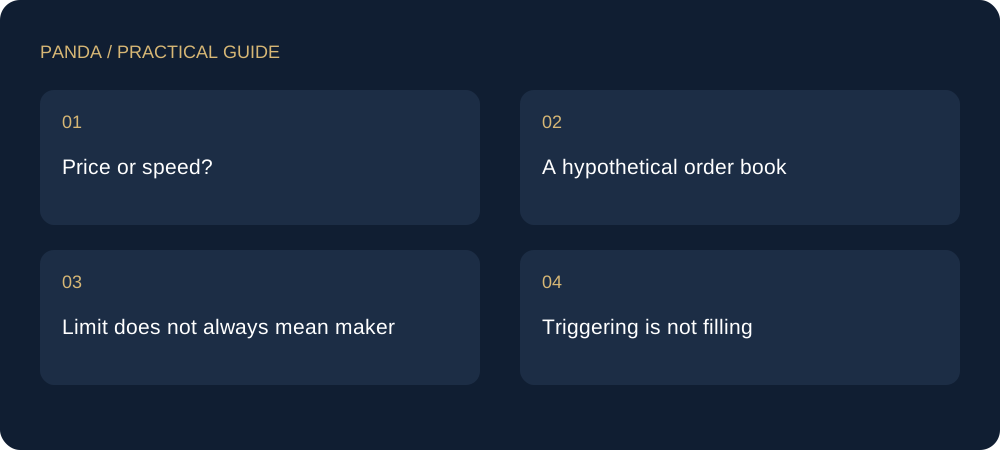
Price or speed?
A market order prioritises execution against available liquidity, so the final price may vary. A limit order constrains acceptable price but may not fill. Neither removes liquidity or execution risk.
A hypothetical order book
Suppose one unit is offered at 100, two at 101 and three at 103. Buying two units at market gives an average of 100.5 before fees. Larger orders can consume more levels. These are illustrative numbers.
Limit does not always mean maker
A limit order that immediately matches an existing order can be a taker trade. Check the actual fill and applicable fee treatment instead of assuming all limit orders receive maker pricing.
Triggering is not filling
A stop condition may trigger a market or limit order, depending on the product. Triggering, successful submission and final execution are separate events. Check the reference price, order type and final status.
This is an independently written practical guide. Product availability, network support and exchange terms can change. Verify the relevant product screen before acting; examples are not live quotes.